
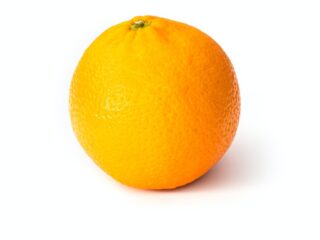
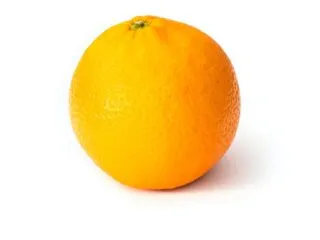
It’s a common occurrence: you’re at a restaurant with your friends, and the waiter asks you what fruit you would like with your meal. You love oranges, but you hesitate. Is it a orange or an orange? You can never remember which way to say it correctly! “An orange” is the correct way to say …


In the English language, we usually use “s” or “es” to show the plurality of a noun. However, some nouns have irregular plural forms that can really throw us off. For instance, is it correct to say “deers”? It is not correct to say “deers”. Deer is the plural of “deer,” and refers to one …


In learning any language, it is important to get things in the right order. For instance, the words “worker’s” and “workers’” have all the same ingredients: the noun “worker,” an apostrophe, and an additional -s, but they don’t mean the same thing. So how do you know when to use “worker’s” or “workers’,” using the …
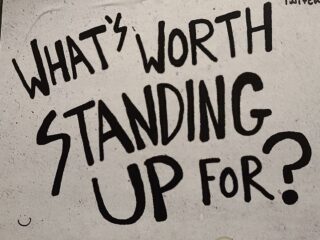
We’ve all heard the old rule: never end a sentence with a preposition. But as language evolves and times change, does the supposed “rule” still stand? Can you end a question with the preposition “for”? You can end a question with the preposition “for.” Despite the traditional assumption that you should never end a sentence …


The present perfect tense is contradictory by nature. It uses present tenses to indicate something is happening at the moment. But, it also uses past participles, which shift events to a time frame that has passed. We call it the present perfect tense because it uses present verb tenses, specifically “has” or “have,” depending on …


English is full of grammar rules that make the language so interesting and sometimes frustrating to learn for second language learners. One such rule is that of verb moods and whether we should say, “if that were true” or “if that was true.” When writing about hypothetical or non-realistic situations, the subjunctive “if that were …